


What is Holter Heart Rhythm Monitoring?
Holter Heart Rhythm Monitoring is a specialized diagnostic tool used for the continuous monitoring of the electrical activity of the heart over an extended period. In contrast to a typical electrocardiogram conducted in a clinical setting, Holter Heart Rhythm Monitoring allows for the detection of irregularities in the heart rhythm that may occur sporadically or unpredictably.
What is the significance of continuous heart rhythm monitoring?
The ability to continuously monitor the heart provided by Holter Heart Rhythm Monitoring is essential for the diagnosis and management of various conditions, such as:
- Detection of Arrhythmias: Holter Heart Rhythm Monitoring is crucial for identifying abnormalities in the heart rhythm (arrhythmias) that may not appear during a standard electrocardiogram. The extended recording period increases the likelihood of detecting occasional or sporadic arrhythmias.
- Identification of Hidden Cardiac Conditions: Holter Heart Rhythm Monitoring can reveal underlying cardiac problems that may not be apparent during a clinical examination, providing critical information for diagnosis and treatment planning.
- Monitoring Medication Therapy: For patients with diagnosed arrhythmias receiving treatment for rhythm disorders, Holter Heart Rhythm Monitoring provides crucial insights into the effectiveness of the treatment and the potential need for adjustment.
What are the clinical applications of Holter Heart Rhythm Monitoring?
Holter Heart Rhythm Monitoring has a wide range of clinical applications, including:
- Investigation of Symptoms: Holter Heart Rhythm Monitoring is useful for examining patients experiencing symptoms such as palpitations, dizziness, or fainting, helping to determine whether these symptoms are related to abnormalities in the heart rhythm.
- Complications of Arrhythmias: Continuous monitoring is vital for patients at risk of serious complications related to arrhythmias, including atrial fibrillation, which can lead to a stroke if not addressed.
- Monitoring Chronic Conditions: Holter Heart Rhythm is an invaluable tool for patients with chronic rhythm disorders, providing continuous data to guide treatment.
How is the examination with Holter Heart Rhythm Monitoring conducted?
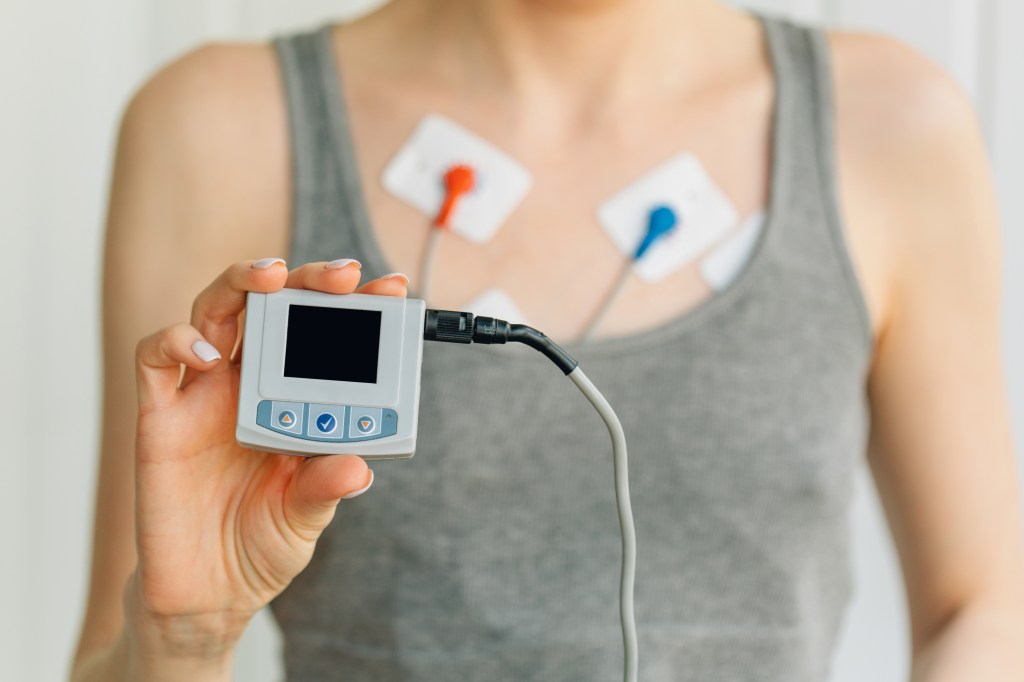
Holter Heart Rhythm Monitoring involves placing electrodes on the chest and connecting them to a small, lightweight recording device that the patient wears on a belt or around the neck. The device continuously records the patient’s electrocardiogram, creating a detailed image of the heart rhythm for a period of 24, 48, 72 hours, or longer. It is a safe and painless examination that allows for accurate diagnosis, treatment planning, and risk assessment for patients with rhythm disorders.
